
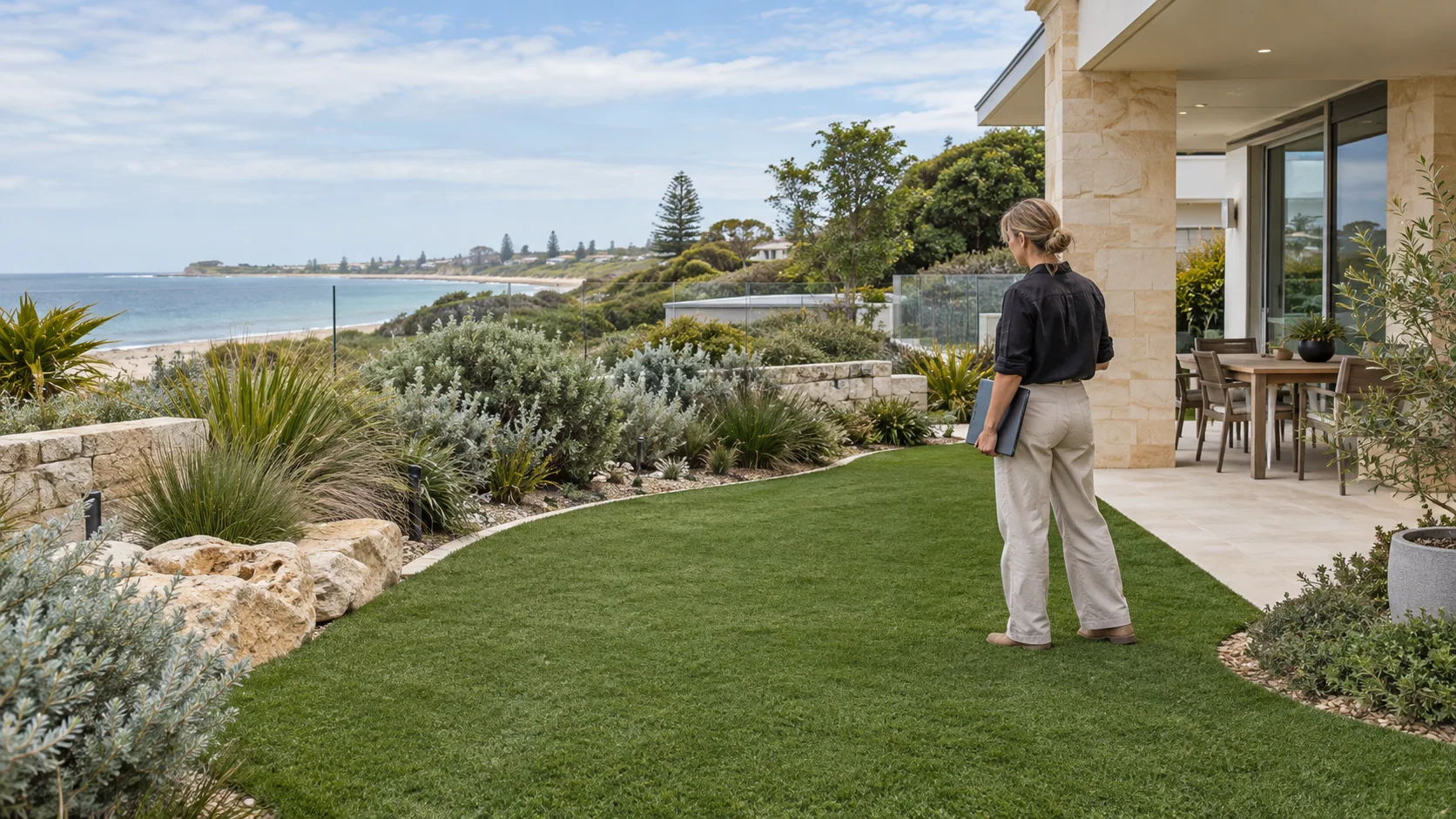
About Us
A thoughtful approach to outdoor spaces. Because a lawn should do more than look beautiful — it should fit the way you live.
A garden should
feel like you.
Good design makes the everyday feel effortless.
Rockingham Artificial Grass is centred on a simple idea: outdoor spaces should be inviting, practical and connected to the home. The lawn, the paths, the planting and the little transitions all matter.
Learn more About Us through the possibilities across our service collection. From compact courtyards to family backyards and shared spaces, the approach begins with understanding how the garden will be used.
The aesthetic is warm and restrained: natural-looking turf, quiet stone textures and room for living planting. The practical details sit beneath that finish, with base preparation, drainage and maintenance considered early.
Professional Rockingham Turf Installers
Professional turf installers in Rockingham do far more than roll out grass. They excavate and compact a firm, free-draining base, level every surface and cut each piece precisely so seams disappear and edges stay crisp. That careful preparation matters in our sandy soils and strong coastal sun, where poor workmanship quickly leads to sinking, lifting and fading.
Experienced installers also recommend the right turf for your family, pets, pool or business, then finish with proper fixings, infill and a thorough clean-up. The result is a lush, natural-looking lawn that stays flat, safe and green for years, without the stress of doing it yourself.
See how the ideas play outBuilt on a Solid Base
Proper excavation and compaction keep your lawn flat, firm and puddle-free for years to come.
Seams You Can’t Spot
Precision cutting and quality adhesives make joins disappear, leaving a lawn that looks naturally seamless.
Tough Against Rockingham Sun
UV-stable turf stays green and soft through scorching summers, sandy soils and everyday family use.
What to Expect from Our Rockingham Turf Installation Company
Clear roles keep a small crew safe and quick, and they make it easier for you to know who to ask.
Roles overlap on small jobs, but the tasks stay the same: someone leads and talks to the owner, someone prepares the ground, someone cuts and joins, and everyone shares the cleaning up.
The lead installer
Reads the plan, sets heights and speaks with you about anything that changes on the day.
The groundworker
Strips, forms and compacts the base, and keeps the work area safe and tidy.
The turf cutter and seamer
Cuts to the layout, matches pile direction and joins pieces so seams disappear.
The finisher
Fixes edges, spreads infill, brushes the surface and checks the finish with you.
What a clear scope holds
A garden quote is easier to assess when the preparation and the finish are explained together.
Writing the scope down protects both sides. It shows what is being built, what is left out and where another trade might be needed.
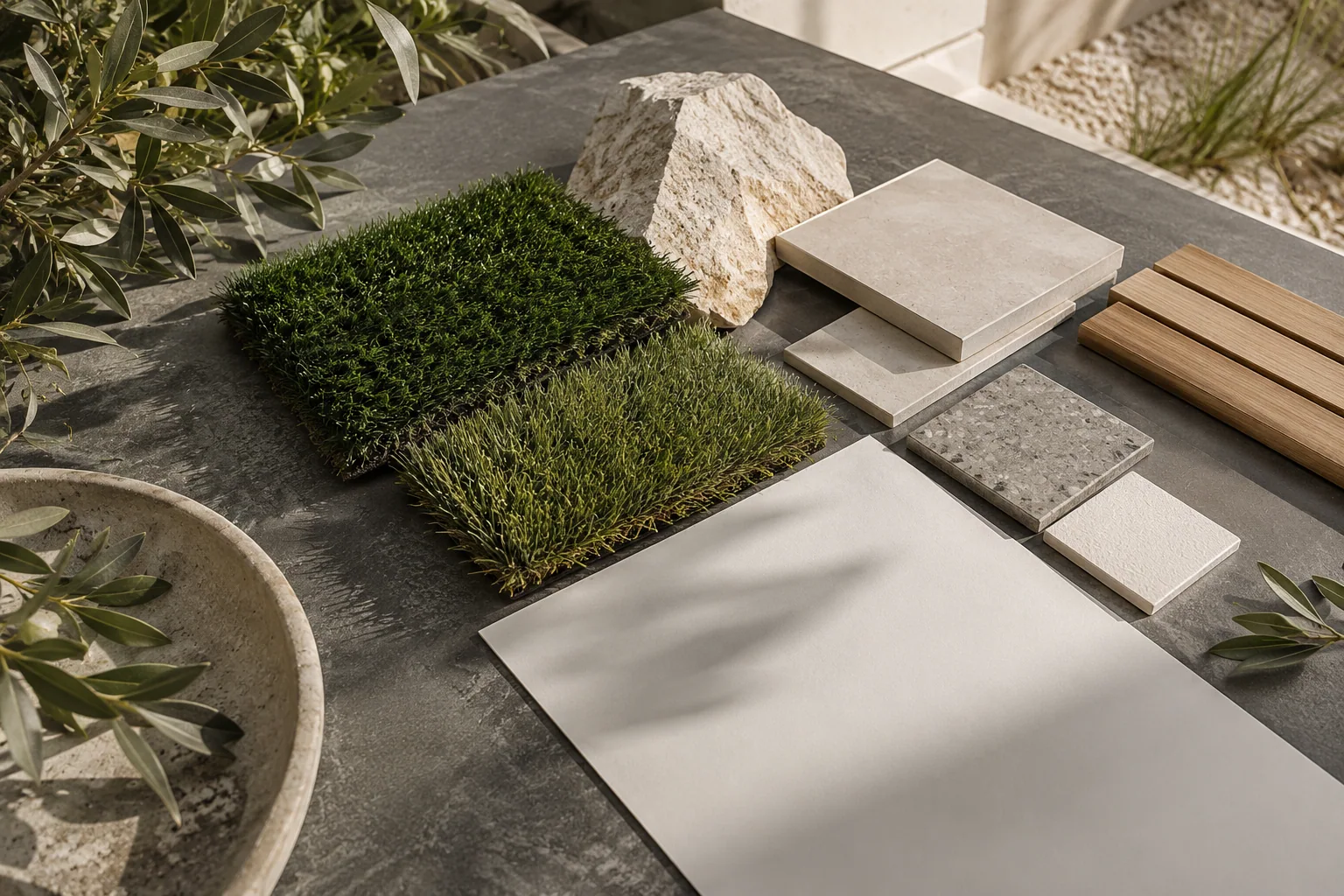
The site
Existing surfaces, access, levels and relevant constraints.
The materials
The selected turf and compatible supporting products, confirmed in writing.
The boundaries
What is included, what is excluded and where other work may be needed.
The care
The maintenance expectations and available product documentation.
Why the sequence matters
Install steps depend on one another, and doing them in order is what keeps the finish flat and durable.
Drainage and levels cannot be fixed after turf is laid without lifting it, so they are settled early. Edges and infill come last because they depend on everything underneath.
Settle levels and falls
Heights are fixed against doors, paths and drains before anything is excavated.
Compact the base in layers
The base goes down in layers so it stays firm under foot and furniture.
Lay and seam the turf
Turf is rolled out in one direction and joined along clean cut edges.
Edges, infill and handover
Edges are fixed, infill brushed in and care is explained on a final walk-through.
Four things the lawn rests on
The look is warm and restrained. Underneath, base preparation, drainage and upkeep are considered early.
These layers are invisible once the turf is down, but they decide how the lawn drains, wears and looks in a few seasons.
Base preparation
The supporting layers suit the ground, the use and the finished height.
Drainage
Water needs a path away from the surface and the structures beside it.
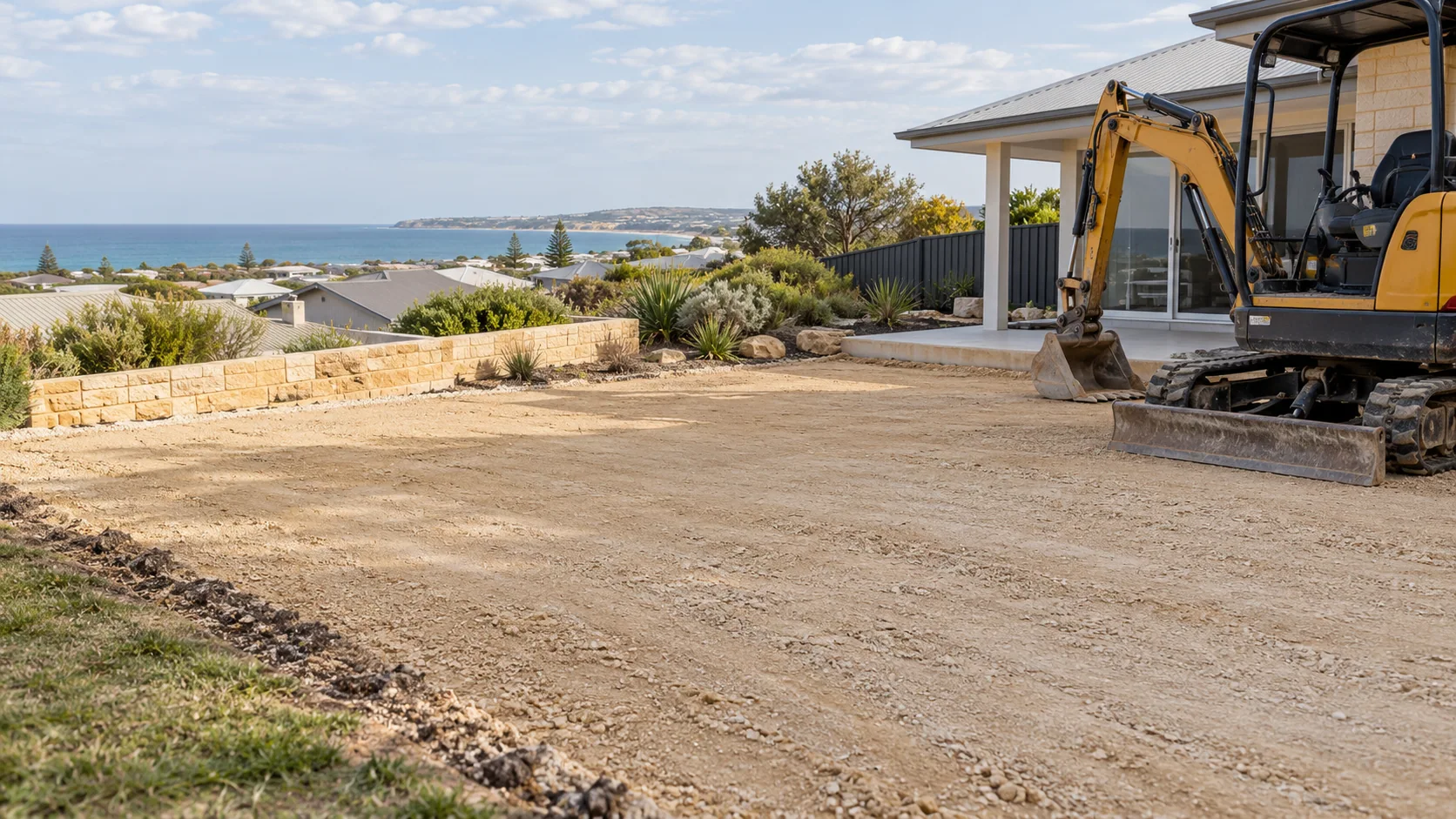
Edges
Borders hold the turf down and tie it to paths and planting.
Upkeep
Brushing and debris removal are part of living with the lawn.
From courtyards to courts
From compact courtyards to family backyards and shared spaces, the approach begins with understanding how the garden will be used.
The same thinking applies at every scale, but a courtyard, a backyard and a sports surface each need different preparation.
Checking the finish together
A walk-through at handover is the best time to raise anything that does not look right.
Pick the part of the garden you care about most and look at it from where you usually stand. Small fixes are far easier before the site is packed up.
Get the terms on paper
Ask for product and workmanship terms in writing, and keep them with your quote.
Whatever the product
Ask before you agree to anything
Phone, or prepare a brief first. Either way, the questions above are a good place to start.
You do not need to settle anything on the first call. Questions asked early tend to shape a better brief.
Sample
Ask to compare it in daylight.
Preparation
Ask what sits beneath the turf.
Terms
Ask for them in writing.
Frequently Asked Question's
Any supplier should be happy to answer these.
Reasonable suppliers expect these questions. If an answer is vague, ask for it in writing before you decide.
Can I see a current turf sample?
Compare texture and colour in natural light. A photograph alone cannot confirm the feel or batch appearance.
How will the ground be prepared?
Ask what the supporting layers need for the site, rather than assuming one depth or material suits every garden.
What should I expect after installation?
Discuss routine care and confirm any actual product or workmanship terms before agreeing to the project.
How do I choose the right lawn for my space?
Start with how you use the garden, the amount of foot traffic and the care routine you can maintain. Compare samples in the light where the lawn will sit.
Can the lawn be planned around existing garden features?
Share the locations of trees, garden beds, paving and services when discussing the layout. These details influence excavation, edges, drainage and access.
How can I discuss my outdoor project?
Call with your suburb, rough measurements and the changes you have in mind. Photographs and a simple sketch help explain the space before a detailed scope is agreed.