What is checked
Edges, seams, levels at doors and the way water leaves the lawn.
 Request a quote
Home lawns
Commercial & community
Sport & play
Preparation & repairs
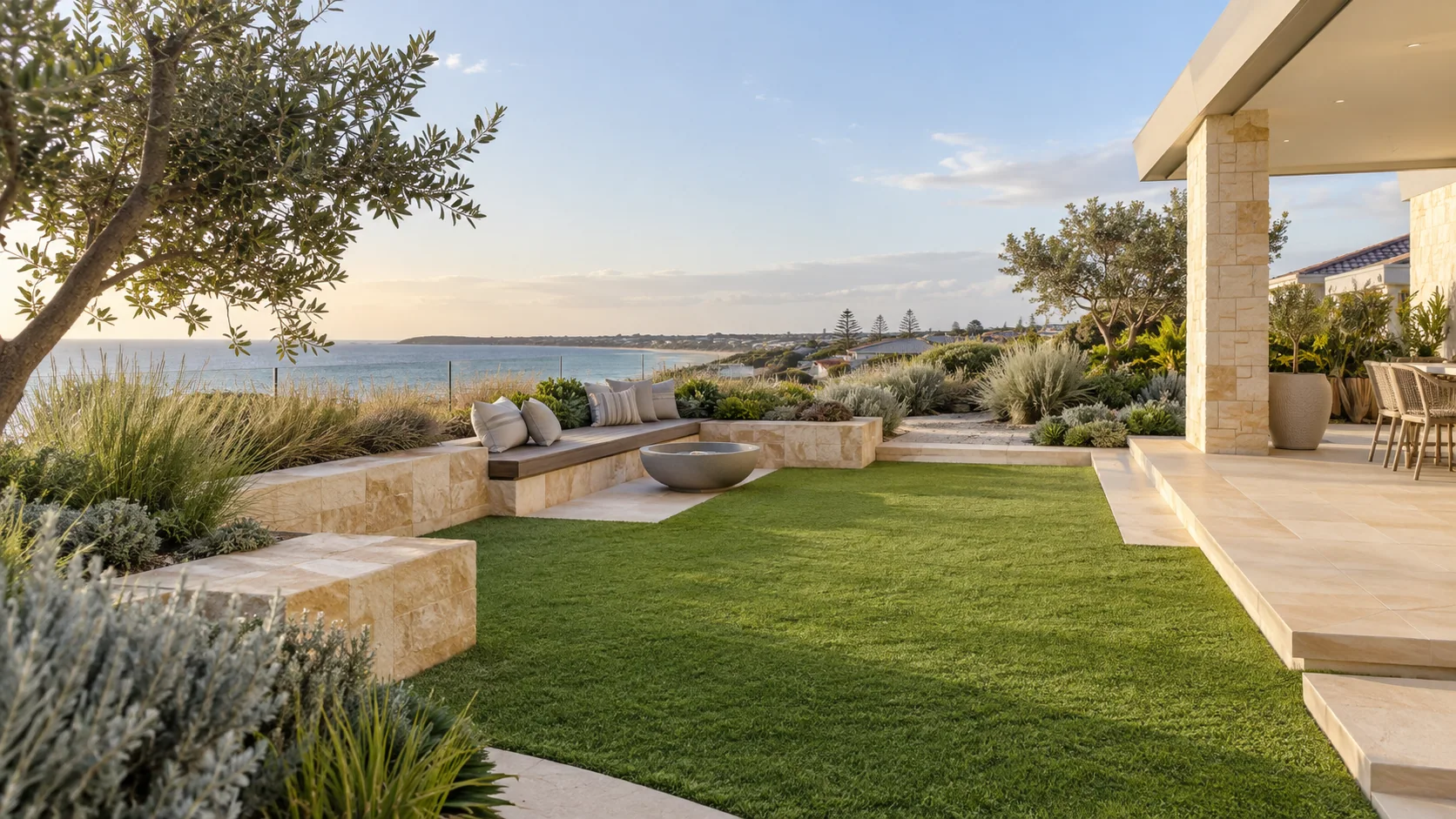
The ideas behind considered outdoor living. Discover our approach, then explore the spaces and materials that inspire it.
Explore Our Story: a garden should feel connected to the home and shaped around the people who use it. Our approach brings natural-looking lawn, stone, timber and living planting into one considered space.
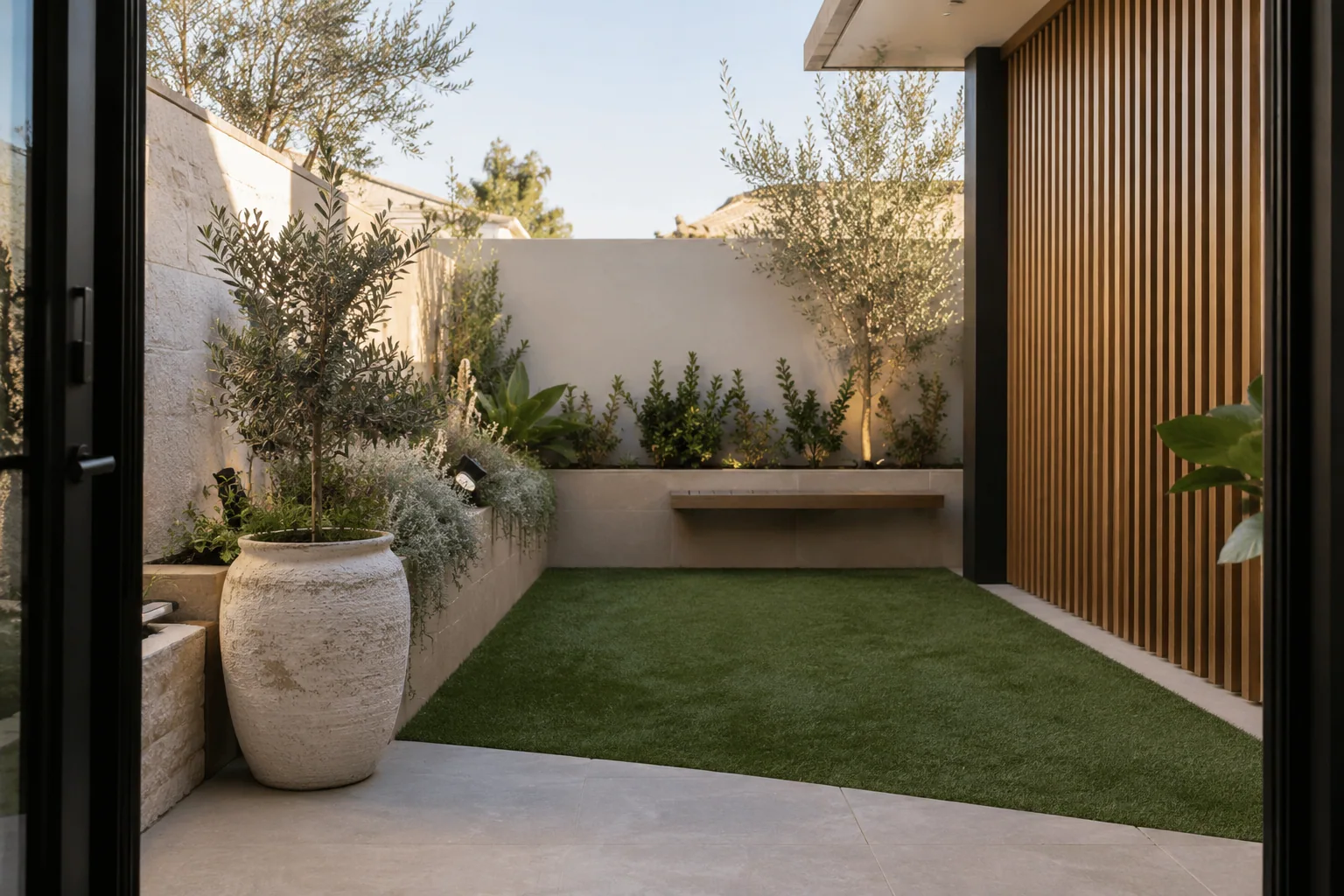
A place to sit. A route to the washing line. A patch of open lawn that does not compete with everything around it. These ordinary details are the beginning of the story.
Designing from a regular weekday keeps the garden honest. It shows where people actually walk, sit and put things down.
Explore backyard lawn planningSeating needs shade and a firm footing.
Everyday paths are drawn before lawn shapes are.
Most of a lawn is made by hand, in the hours before anyone sees it.
Kneeling on the base to check a seam, trimming a curve with a sharp blade, brushing fibres upright: this quiet work is where a lawn gets its character.
An installer walks the site first, noting falls, roots and soft spots.
Straight edges and smooth curves come from patient marking and cutting.
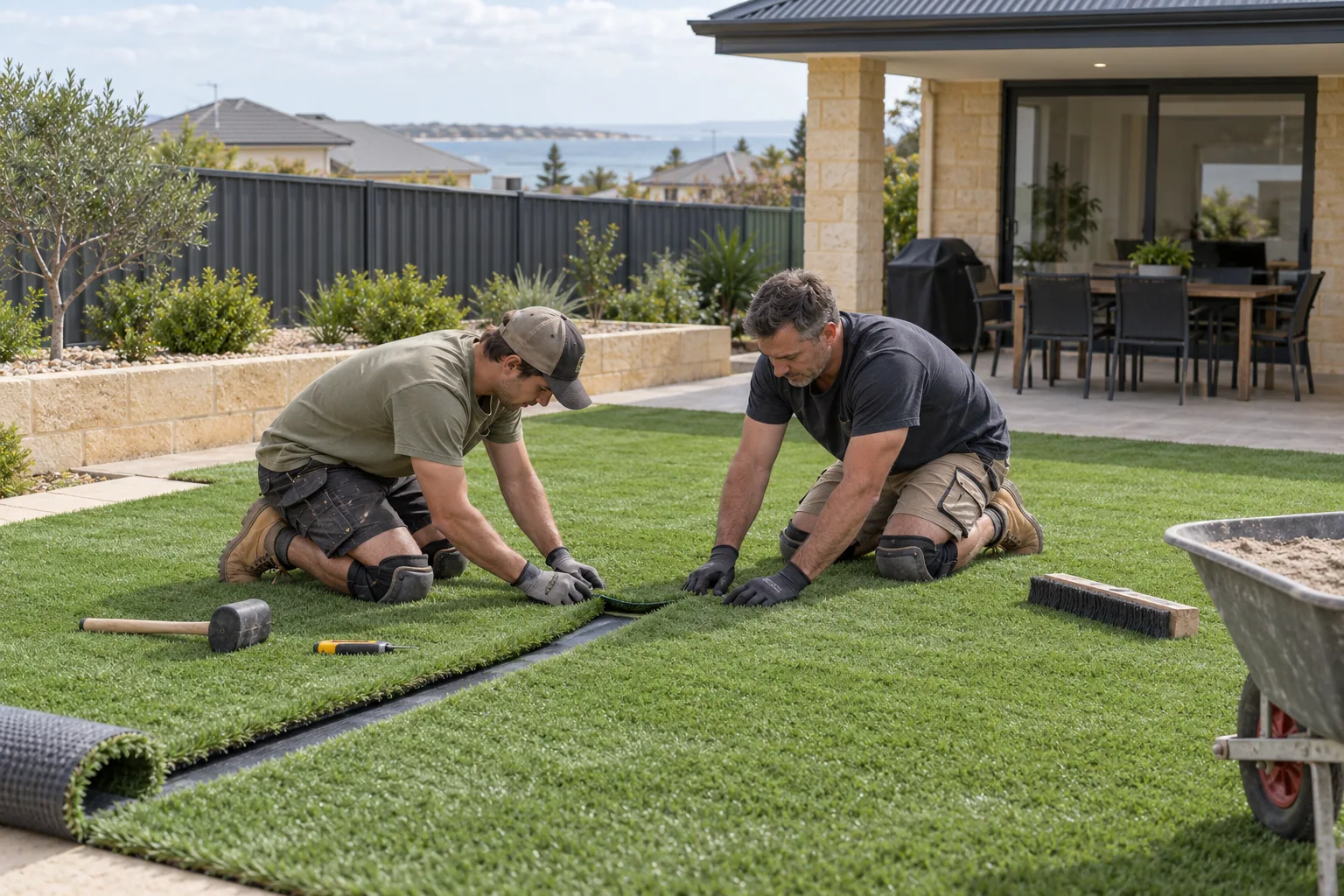
Seams are felt as well as seen, and corrected before they are fixed.
A warm stone edge, a timber surface and the shadow of a living plant bring contrast to the lawn. The palette feels calmer when each material has a clear role.
Texture does the work colour cannot. Fibre, stone and timber each catch light differently, which is why samples beat photographs.
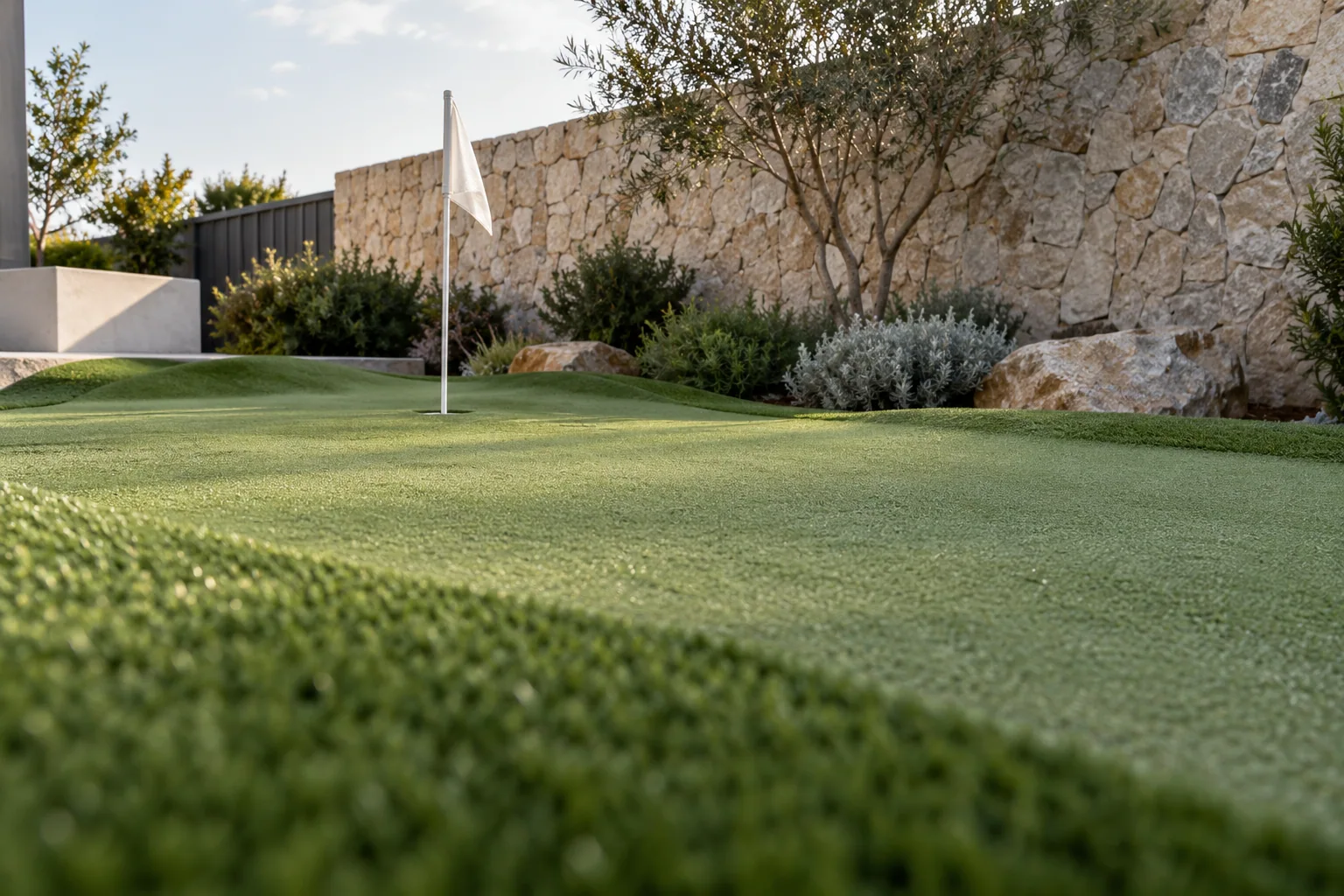
Varied blades and dry-looking thatch read as a real lawn.
Pale pebbles and native planting soften the turf edge.
A fine junction where deck boards meet the lawn.
The part nobody photographs is the part that decides how the lawn feels underfoot.
A firm, even base reads as a flat, quiet lawn. A rushed one shows up as ripples and soft patches, and it cannot be fixed without lifting the turf.
Weak topsoil and old roots are removed so nothing rots or sinks later.
Crushed rock is laid in layers and shaped with a gentle fall.
Each layer is compacted and checked with a straight edge.
Turf goes down only when the base is firm, even and clean.
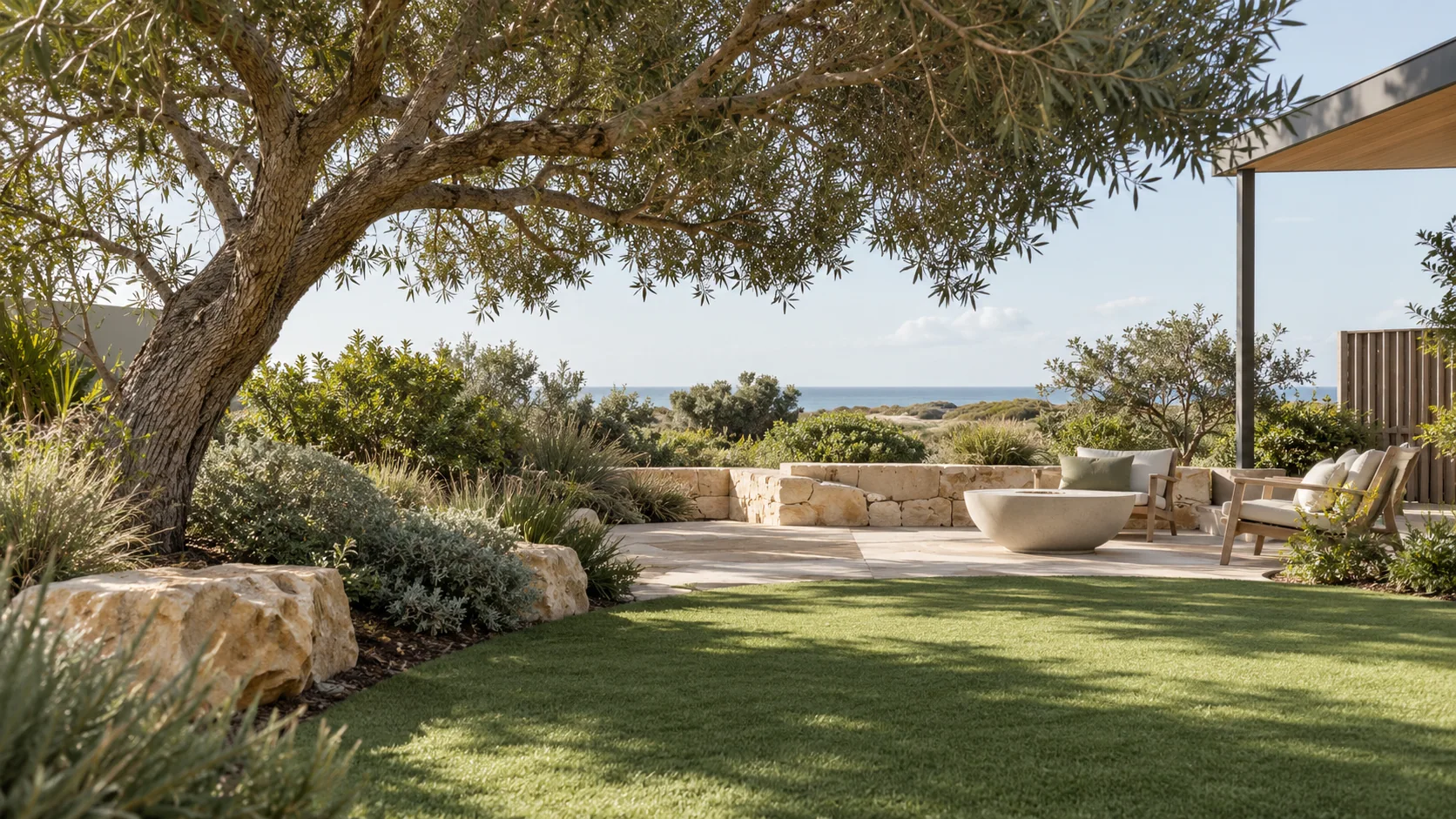
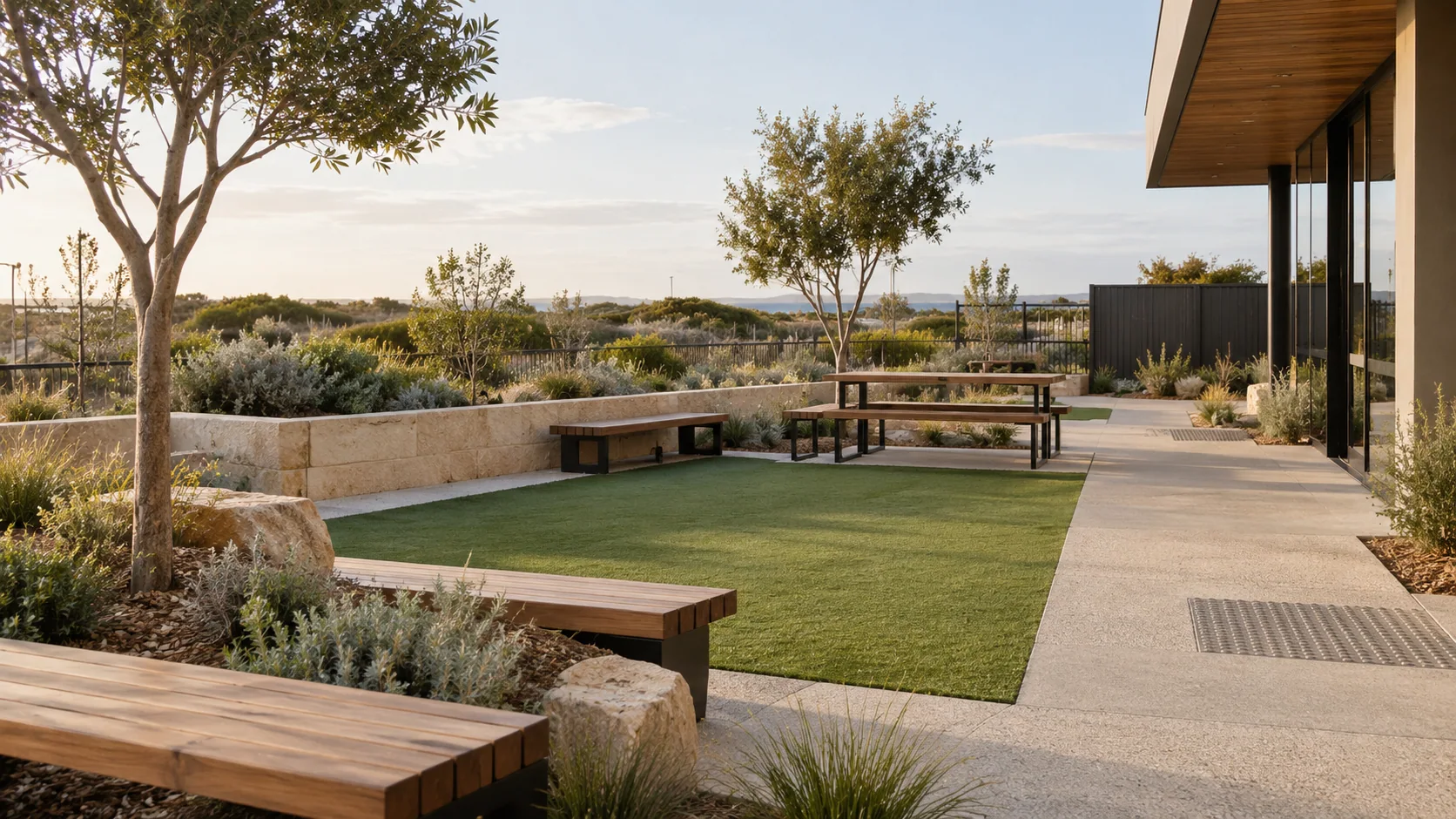
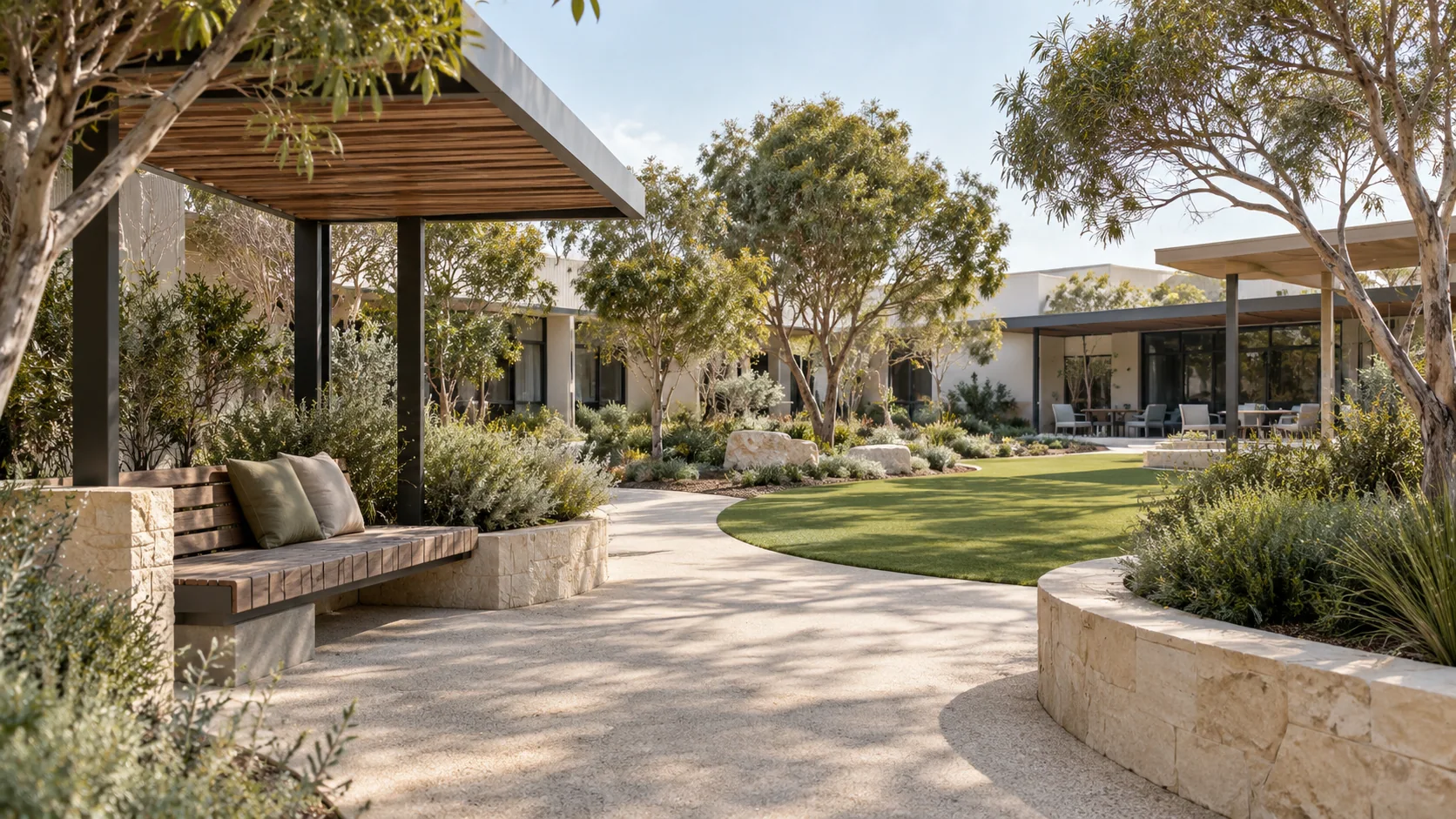
A mature tree, native planting and a stone seat can frame a lawn better than more lawn.
Shade moves through the day and across the seasons. Watching it before you place seating avoids a spot that is pleasant only in winter.
Watch where shade falls through the day before placing seating.
A seat at the lawn edge gives the garden a pause.
The finest details of a lawn come from a handful of simple tools.
A sharp blade, the right tape and a stiff broom matter more than any single product. They are why a good seam reads as grass and a poor one reads as a join.
Clean cuts along the backing so edges meet without gaps.
Hold seams flat and invisible under the pile.
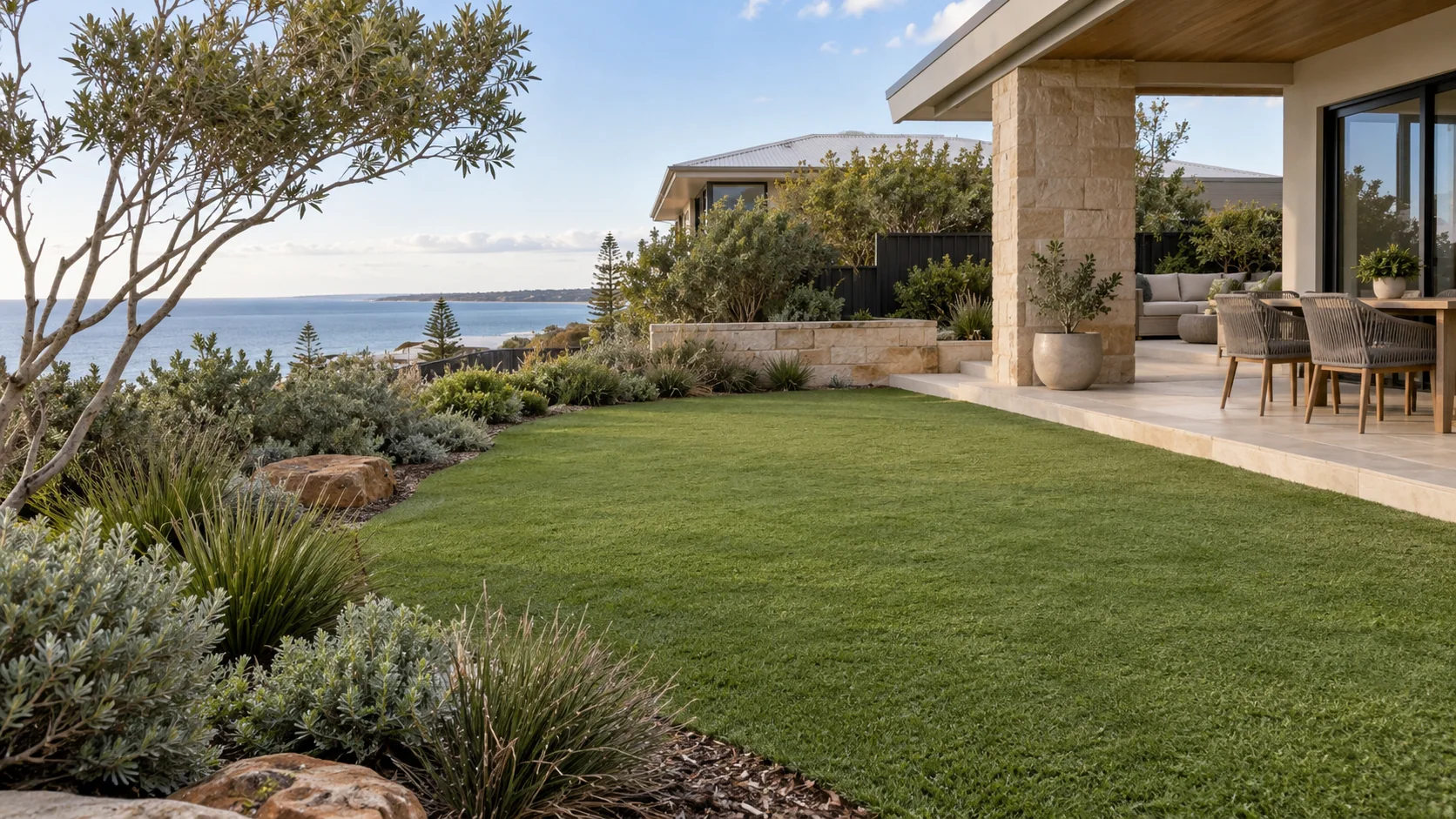
Keep the turf boundary tight to paths and borders.
Lifts the fibres and settles infill evenly.
Use these illustrative studies to find a direction, then bring the idea back to the conditions of your own site.
These studies are ideas, not completed projects. Use them to talk about the feeling you want, then adapt it to your own site.
Handover is a quiet moment: a final brush, a walk around the edges and a few questions about care.
It is also the best time to ask for anything that looks off. A garden is easier to put right while the crew is still on site.
Edges, seams, levels at doors and the way water leaves the lawn.
How to brush, how to clean and what to avoid in the first weeks.
A garden that works on a quiet weekday has a stronger foundation than one arranged only for a photograph.
A test for any design
The same garden can be read in three passes. Each one asks a different question.
Reading the garden three times, for use, for surface and for upkeep, catches problems a single pass misses.
Who walks here, sits here, plays here?
Which finish suits that use and the light?
What will keep it looking right once the novelty fades?